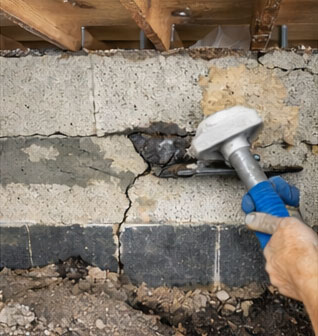
Every home breathes. As the seasons change in America, from the humid summers of the South to the frigid winters of the North, the soil beneath our houses expands and contracts. Because of this natural movement, almost every concrete foundation will eventually develop a crack.
For many homeowners, the sight of a thin line snaking down a basement wall is a source of immediate panic. However, not every crack is a sign that the sky is falling. The challenge lies in distinguishing between “settlement cracks”—the aesthetic growing pains of a house—and “structural cracks,” which indicate a fundamental failure of the home’s skeleton.
Ignoring a foundation issue is a dangerous game of wait-and-see. What begins as a hairline fracture can, under the right conditions, evolve into a catastrophic emergency that compromises the safety of your family and the value of your largest financial asset.
Understanding the “tipping point” where a cosmetic blemish becomes a structural crisis is essential for every property owner. It is the difference between a $500 epoxy injection and a $50,000 foundation rebuild.
The Anatomy of a Non-Emergency: Hairline and Shrinkage Cracks
Most new homes experience some degree of settling within the first few years of construction. These are often “shrinkage cracks,” caused by the water evaporating out of the concrete mix as it cures. Typically, these are vertical or diagonal, no wider than a piece of thread, and do not appear to be growing. If a crack is less than 1/16th of an inch wide and remains dry even during a heavy rainstorm, it is generally considered a maintenance item rather than an emergency.
However, even these minor fissures require monitoring. A non-emergency crack can quickly change status if the grading around your home changes or if a local drought causes the soil to pull away from the foundation. The key is to mark the ends of the crack with a pencil and check them every few months. If the crack stays within its borders, it is a cosmetic issue; if it begins to “travel” or widen, the clock has started ticking on a more serious problem.
Horizontal Cracks: The Red Alert of Foundation Failure
If you walk into your basement or crawl space and see a crack running horizontally along the middle of the wall, you are looking at a structural emergency. Unlike vertical cracks, which often result from the house moving down, horizontal cracks are caused by soil moving in. This is usually the result of intense hydrostatic pressure—water-saturated soil pressing against the wall with thousands of pounds of force.
A horizontal crack indicates that the wall is no longer able to support the lateral load of the earth. If left unaddressed, the wall will eventually “shear” or bow inward, which can lead to a total collapse of that section of the foundation. This is not a project for a DIY kit; it requires professional intervention immediately. In many cases, carbon fiber straps or steel I-beams must be installed to counteract the pressure and prevent the wall from failing entirely.
Warning Signs of Active Structural Shifting
When a crack moves beyond the “settling” phase, it begins to affect the rest of the house. You may notice symptoms on the upper floors that seem unrelated but are actually direct results of a foundation emergency.
- The “Penny Test”: If a crack is wide enough to fit a penny into (approximately 1/8th of an inch or wider), it has moved beyond a simple shrinkage issue and requires a professional assessment.
- Stair-Step Patterning: In brick or block foundations, cracks that follow the mortar joints in a diagonal “stair-step” pattern indicate that one corner of the home is sinking faster than the rest.
- Wall Separation: If you notice that the foundation wall is pulling away from the wooden “sill plate” or the floor joists above, the house is losing its structural connection to its base.
Secondary Symptoms: When the House “Speaks”
Often, the emergency isn’t just visible in the concrete; it’s visible in the functionality of your living space. If your foundation is in crisis, the rigid frame of your home will twist, leading to several unmistakable signs:
- Doors and Windows: If a door that used to swing freely now sticks or if a window suddenly becomes impossible to lock, the frame has likely been pulled out of “square” by a shifting foundation.
- Drywall Cracks: Look for diagonal cracks appearing above door frames or at the corners of windows in the upper floors. These often mirror the stress occurring in the foundation below.
- Uneven Floors: If a ball rolled on a hardwood floor consistently moves toward one corner of the room, you have a significant slope that points toward a localized foundation collapse.
Environmental Triggers for Rapid Escalation
Sometimes, a stable crack becomes an emergency due to external factors. In America’s increasingly volatile weather landscape, a “500-year flood” or a record-breaking drought can turn a minor issue into a nightmare overnight.
- Heavy Rain Cycles: If a crack begins to “weep” or gush water during a storm, the hydrostatic pressure has found a path of least resistance. This water can erode the soil beneath the slab, leading to a “sinkhole” effect.
- Extreme Drought: In states with heavy clay soil, like Texas or Missouri, drought causes the soil to shrink and pull away from the house. This leaves the foundation unsupported, causing it to drop suddenly.
- Large Tree Roots: If a large tree is planted too close to the house, its roots can physically lift the foundation or suck all the moisture out of the soil, causing localized settling and massive cracking.
Secure Your Home Before the Crack Becomes a Collapse
A foundation crack is a window into the future of your home’s stability. While a tiny vertical line might be nothing more than a sign of a house “settling in,” a horizontal gap or a widening stair-step fracture is a call to action that cannot be ignored.
The cost of foundation repair is always lower today than it will be tomorrow. By identifying these emergency signals early, you protect your family’s safety and ensure that your home remains the solid, secure sanctuary it was built to be. Don’t wait for the walls to bow—act while the solution is still manageable.